Pitru Paksha is a fortnight in the Hindu lunar calendar set aside for the ancestors, falling in September or October.
Shraddha is the rite performed during it — offerings of water and food made on behalf of the departed. It is the principal remedy for pitra dosh, and it is the period during which new undertakings are traditionally avoided.
A reading describes tendencies and timing; it does not predict fixed events and it is not medical, legal or financial advice. You will be told plainly when a chart does not support a conclusion. No outcome is guaranteed.
What the fortnight is
Sixteen lunar days ending at the new moon, during which the ancestors are held to be particularly near and offerings made to them particularly effective. The dates move each year with the lunar calendar, falling in September or October.
Each ancestor is traditionally remembered on the tithi — the lunar day — matching their date of death. Where that is unknown, which for migrant families it very often is, Mahalaya Amavasya, the final new moon day, serves for all ancestors collectively.
What shraddha involves
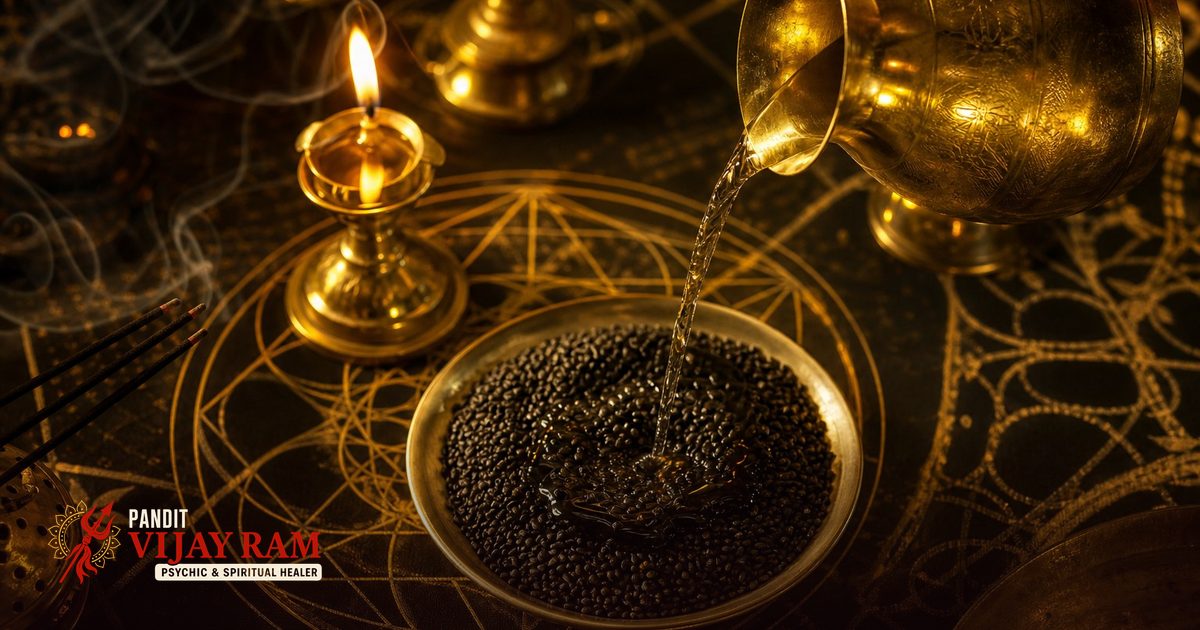
- Tarpan — water offerings, made with sesame seeds, facing south.
- Pind daan — rice balls offered on behalf of the departed.
- Feeding — brahmins traditionally, and in practice whoever needs it. Food is central rather than incidental to the rite.
- Crows and dogs — a portion set aside, held traditionally to carry to the ancestors.
- Charity, particularly clothing and food.
- Restraint — new purchases, celebrations and beginnings set aside for the fortnight.
Why this matters especially for families in Britain
Migration in the 1950s, 60s and 70s left a very large number of deaths unattended. People were four thousand miles away, could not get back, could not afford to, or found out weeks later. Last rites were not performed, or were performed by someone else, or were not performed properly.
That is one of the most frequent findings behind a pitra dosh reading, and it is worth saying plainly that it was nobody’s fault. It was circumstance. But the tradition holds that the obligation does not lapse, and the observance is how a descendant completes what could not be completed at the time.
A good number of people find this the most meaningful work they do here, quite apart from whether anything in their circumstances changes. See pitra dosh explained.
Observing it from the UK
- You do not need to travel to India. The rites are performed where you are.
- Any flowing water serves for tarpan — a river, or at home with a vessel poured out afterwards.
- Feeding is the accessible core. Cook for people, give to a food bank, or provide a meal at a mandir. It counts, and it is the part most within reach.
- The eldest son traditionally performs it, though where that is not practical another descendant does, and in many families now a daughter does.
- Where dates of death are unknown, Mahalaya Amavasya covers all ancestors collectively.
What is avoided during the fortnight
New beginnings, principally. Weddings, griha pravesh, business openings, major purchases and starting a new venture are all traditionally set aside until it ends.
This has a practical consequence worth planning around: if a wedding or a house move falls in September or October, check the dates early. Families are regularly caught out by discovering the booked date sits inside Pitru Paksha. See muhurat and auspicious dates.
- pitru paksha
- shraddha
- ancestors
- pitra dosh
Last reviewed 16 August 2026 by Vijay Ram, 33 New Broadway, Ealing, London W5 5AH. Call +44 7766 402133 for a private consultation.
Frequently asked questions
When is Pitru Paksha?
It moves with the lunar calendar and falls in September or October, ending at Mahalaya Amavasya. The exact dates change each year.
I do not know when my grandfather died. Can I still observe it?
Yes. Mahalaya Amavasya, the final new moon day, serves for all ancestors collectively and is used precisely where dates are unknown — which for migrant families is common.
Can a daughter perform shraddha?
Traditionally the eldest son performs it, but where that is not practical another descendant does, and in a great many families now a daughter does. It is better performed by a daughter than not performed.
Do I have to go to India?
No. The rites are performed where you are. Feeding people and giving to those with less is the accessible core of it and is entirely doable from Britain.
Not sure what you are dealing with?
Describe what has been happening. You will get an honest reading of whether this is spiritual, circumstantial or medical — with no pressure and no charge for the first conversation.
33 New Broadway, London W5 5AH, United Kingdom · Open 7 days · 9:00am–9:30pm